Transform Your Daily Practice with Essential Yoga Poses
Discover the foundational poses that form the backbone of a sustainable yoga routine, designed for practitioners of all levels to build strength, flexibility, and mindfulness every single day.
Key Features of Our Yoga Guide
Yogabalanceguide offers comprehensive, practical instruction on the poses that matter most for your daily wellness journey.
Step-by-Step Instructions
Clear, detailed guidance for every pose including proper alignment, breath work, and common modifications to suit your current ability level.
Beginner-Friendly Approach
Start from the foundations with poses that build core strength and body awareness, progressing naturally towards more advanced sequences.
Mindfulness Integration
Learn how to combine movement with conscious breathing and mental focus to deepen your practice and achieve greater body-mind connection.
Progressive Sequences
Build your practice with structured routines that grow in complexity and intensity, helping you track improvement over weeks and months.
Injury Prevention Guidance
Understand contraindications for each pose and how to modify movements if you have existing physical limitations or areas of concern.
Flexible Time Commitment
Choose from 10-minute quick sessions to 60-minute comprehensive routines, fitting your practice seamlessly into any daily schedule.
Why Daily Yoga Practice Matters
Build a Sustainable Wellness Routine
Regular yoga practice offers far more than flexibility improvement. Consistent daily movement strengthens your entire musculoskeletal system, improves balance and proprioception, and creates a foundation for long-term physical wellness.
Enhanced Body Awareness
Develop a deeper understanding of how your body moves and feels with each pose.
Improved Posture and Alignment
Strengthen the muscles that support proper spinal alignment throughout your day.
Increased Flexibility and Mobility
Gradually expand your range of motion and reduce stiffness in commonly tight areas.
Mental Clarity and Focus
Experience the calming effects of synchronized breath and movement on your nervous system.
Your 5-Step Daily Yoga Journey
Begin with Centering
Start each session with 2-3 minutes of conscious breathing to calm your mind and set an intention for your practice.
Warm Up Gently
Move through gentle neck rolls, shoulder circles, and spinal twists to prepare your body for deeper work.
Flow Through Core Poses
Practice your main sequence of standing poses, balance work, and strength-building postures at your appropriate level.
Cool Down and Stretch
Spend 5-10 minutes in gentle forward folds and supine stretches to lengthen muscles and enhance flexibility.
Each step builds naturally into the next, creating a balanced practice that honours both effort and ease—the core principle of yoga philosophy.
Explore Complete RoutinesPose Categories and Benefits
Standing Poses
Build leg strength and stability. Standing poses like Mountain Pose, Warrior variations, and Triangle develop lower body power while improving balance and proprioception.
- • Strengthens quadriceps and glutes
- • Improves ankle and knee stability
- • Enhances balance and coordination
Forward Folds
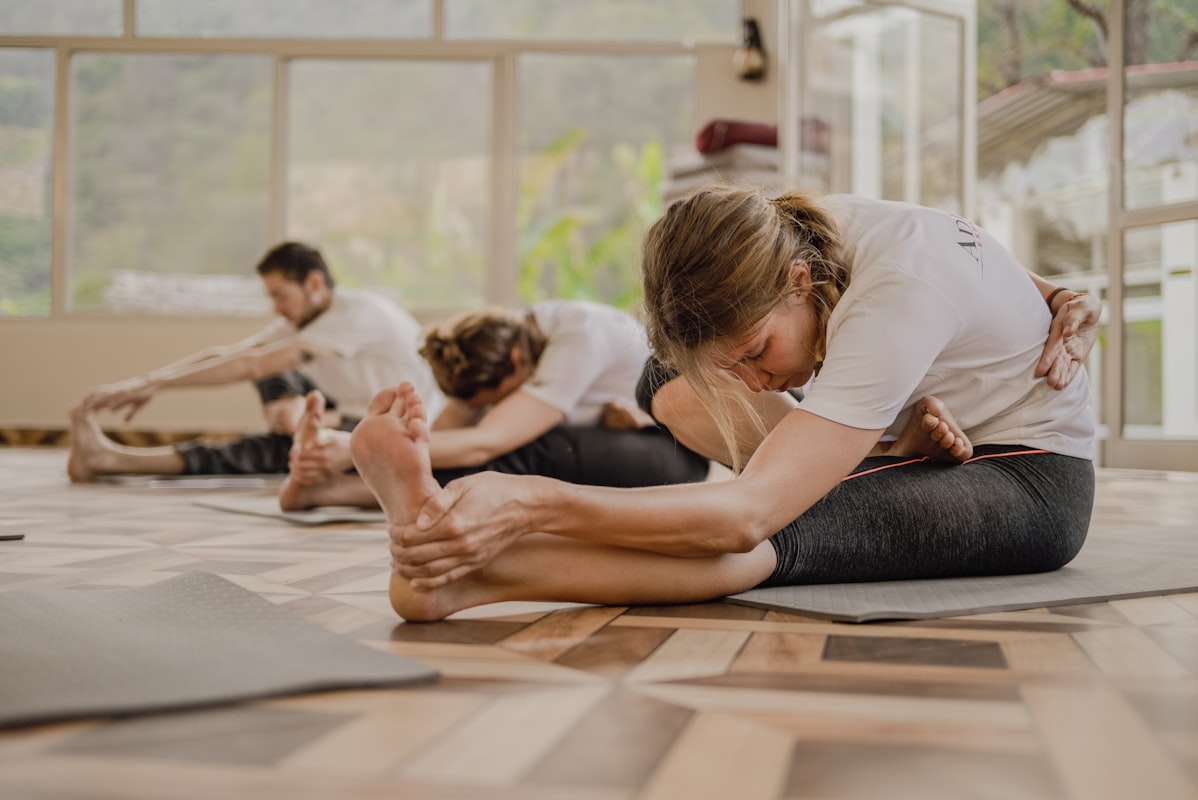
Stretch and lengthen the entire posterior chain. These poses gently release tension in the hamstrings, calves, and lower back while promoting a sense of calm.
- • Increases hamstring and calf flexibility
- • Relieves lower back tension
- • Activates parasympathetic nervous system
Backbends
Strengthen the back body and open the chest. Poses like Cobra, Locust, and Bridge energise your practice and build posterior chain strength.
- • Strengthens erector spinae muscles
- • Opens chest and improves posture
- • Counteracts desk posture strain
Hip Openers
Release tension in the hips and pelvis. Poses like Pigeon, Lizard, and Butterfly stretch the deep hip muscles where stress and tension often accumulate.
- • Releases hip flexor and gluteal tension
- • Improves pelvic mobility
- • Supports emotional release and wellbeing
Spinal Twists
Improve spinal mobility and detoxification. Twists massage internal organs and enhance the range of rotational movement in your spine.
- • Increases spinal mobility and rotation
- • Aids digestive function
- • Relieves spinal tension
Balance Poses
Cultivate focus and stability. Poses like Tree Pose and Warrior III strengthen stabiliser muscles and improve proprioceptive awareness.
- • Enhances proprioception and body awareness
- • Strengthens smaller stabiliser muscles
- • Sharpens mental focus and concentration
Frequently Asked Questions About Daily Yoga Practice
The ideal practice length depends on your schedule and goals. A 10-15 minute daily routine is excellent for beginners or busy days and provides real benefits. If you can dedicate 30-45 minutes, you'll have time for a more comprehensive warm-up, core poses, and longer relaxation. Even 5 minutes of conscious movement and breathing is better than skipping practice entirely. Consistency matters more than duration—daily practice of 15 minutes will yield better results than sporadic 60-minute sessions.
Yes, daily yoga practice is safe when performed with proper attention to alignment and your body's signals. However, intensity and type should vary throughout the week. Alternate between active styles (standing poses, flowing sequences) and restorative or yin practices to avoid overuse injuries. Always warm up properly, listen to pain signals (not just stretching discomfort), and modify poses as needed. If you have existing physical limitations or injuries, consult with a qualified yoga teacher or healthcare provider about creating a safe routine specific to your needs.
There's an important distinction between the stretch sensation (which should feel mild to moderate) and pain (which indicates potential injury risk). Sharp pain, shooting sensations, or pain that lingers after practice are signals to stop the pose immediately. Always use offered modifications first—they're not a sign of weakness but tools for building safely. Move slowly in and out of poses, never bounce, and never force deeper stretches. If pain persists with certain poses, skip them temporarily and explore alternative poses that target the same muscle groups safely.
Yoga is remarkably adaptable and can be modified for virtually all ages and fitness levels. Beginners should focus on foundational poses with proper alignment before progressing to more advanced variations. Older adults benefit from yoga's gentle strength and balance work but should avoid extreme backbends or intense twists without guidance. Children can enjoy yoga's playful aspects with age-appropriate poses. The key is starting where you are, respecting your body's current capabilities, and progressing gradually as strength and flexibility improve.
You can start yoga with no equipment at all—just your body, some floor space, and comfortable clothing. A yoga mat provides cushioning for your joints and prevents slipping, making it a worthwhile investment if you'll practise regularly. Props like blocks and straps help with alignment, especially for beginners, and can make poses more accessible. A folded towel or blanket works as a block in a pinch. As you develop your practice, you might explore additional props, but they're genuinely optional. The most important elements are your commitment and consistent practice.
Many people notice improved flexibility and reduced muscle soreness within 2-3 weeks of consistent practice. Mental clarity and stress reduction often appear within the first few days as breathing practices activate the parasympathetic nervous system. Significant strength improvements typically develop over 6-8 weeks, while postural changes and deeper flexibility gains emerge over months of consistent work. Remember that yoga is a practice, not a destination—the benefits accumulate gradually and deepen over time rather than appearing dramatically overnight.
Real Stories from Our Community
"After starting daily yoga practice with Yogabalanceguide, I noticed my lower back pain had almost completely disappeared within three weeks. The step-by-step instructions helped me understand proper alignment, and I finally feel confident in my poses without worrying about injury. The short 15-minute routines fit perfectly into my morning routine."